系统结构#
概述#
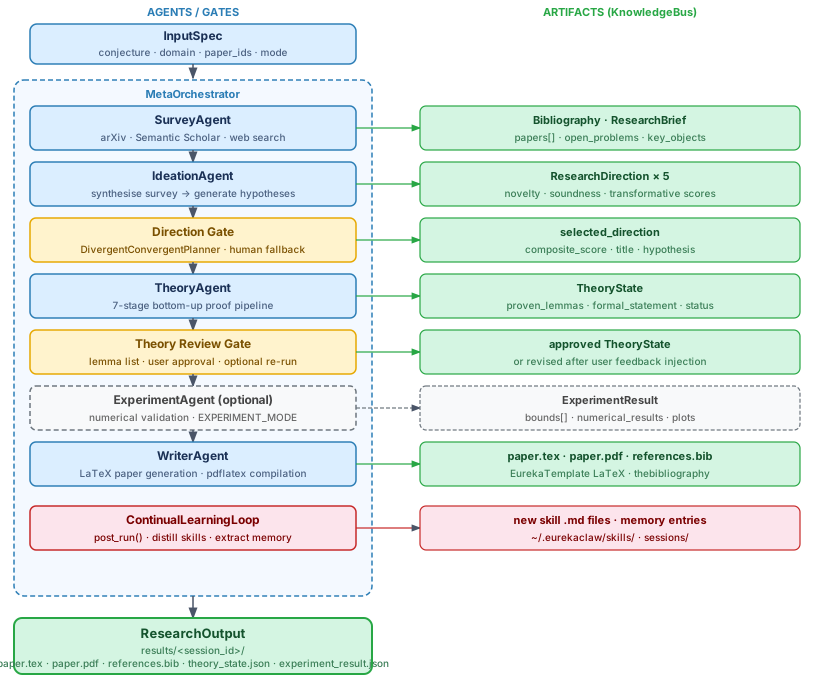
EurekaClaw 以多智能体流水线形式组织,由 MetaOrchestrator 统一调度。每个智能体专注于研究生命周期的某一阶段,产物通过中央 KnowledgeBus 在智能体之间共享。
流水线阶段#
核心组件#
KnowledgeBus#
所有智能体共享的中央内存产物存储。所有数据通过它流转——智能体在轮次之间不保留私有状态。
KnowledgeBus
├── ResearchBrief    — survey findings, selected direction
├── TheoryState      — proof state machine (lemma DAG, proofs, goals)
├── Bibliography     — all papers found during survey
├── ExperimentResult — numerical validation results
└── TaskPipeline     — current task execution plan
产物在每次会话结束时持久化到 ~/.eurekaclaw/runs/<session_id>/。
智能体会话与上下文压缩#
每个智能体在工具调用循环中维护一段对话历史(AgentSession)。为防止上下文无限增长:
历史每隔 N 轮压缩一次(通过
CONTEXT_COMPRESS_AFTER_TURNS配置,默认 6)快速模型将历史压缩为要点摘要
完整对话被替换为该摘要
技能注入#
每次调用智能体之前,SkillInjector 从技能库中检索最相关的前 k 个技能,并以示例形式注入系统提示词。这是跨会话学习的主要机制。
领域插件系统#
领域特定的行为(工具、技能、工作流提示)通过 DomainPlugin 类注入。正确的插件根据领域字符串或猜想关键词自动检测。详见 domains.md。
数据模型#
TheoryState — 证明状态机#
TheoryState
├── informal_statement      — plain-English conjecture
├── formal_statement        — LaTeX-formalized theorem
├── known_results[]         — KnownResult extracted from literature
├── research_gap            — GapAnalyst's finding
├── proof_plan[]            — ProofPlan (provenance: known/adapted/new)
├── lemma_dag{}             — LemmaNode graph (dependencies)
├── proven_lemmas{}         — lemma_id → ProofRecord
├── open_goals[]            — remaining lemma_ids to prove
├── failed_attempts[]       — FailedAttempt history
├── counterexamples[]       — Counterexample discoveries
├── assembled_proof         — final combined proof text
└── status                  — pending/in_progress/proved/refuted/abandoned
ResearchBrief — 规划状态#
ResearchBrief
├── domain, query, conjecture
├── directions[]            — ResearchDirection (scored 0-1)
│     ├── novelty_score
│     ├── soundness_score
│     ├── transformative_score
│     └── composite_score   — weighted average
├── selected_direction      — chosen after convergence
└── open_problems[], key_mathematical_objects[]
TheoryAgent 内层循环(7 阶段)#
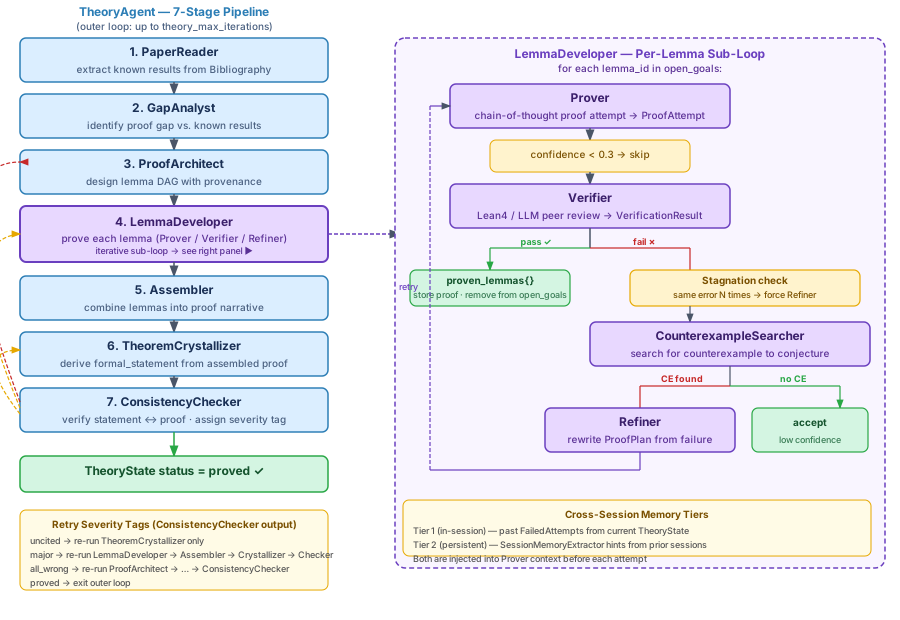
TheoryAgent 运行一个自底向上的证明流水线,实现于 inner_loop_yaml.py:
阶段 |
类 |
输入 |
输出 |
|---|---|---|---|
1 |
|
Bibliography |
|
2 |
|
known_results + conjecture |
|
3 |
|
research_gap |
|
4 |
|
proof_plan, open_goals |
|
5 |
|
proven_lemmas |
|
6 |
|
assembled_proof |
|
7 |
|
完整 TheoryState |
一致性报告 |
LemmaDeveloper 对每个引理运行独立的内层循环:
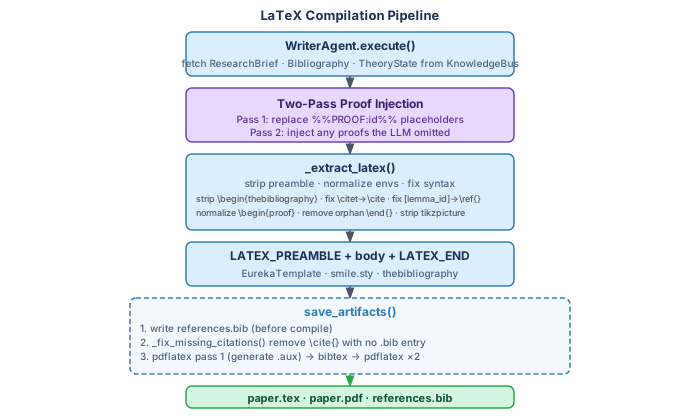
LaTeX 编译流水线#
方向规划回退机制#
IdeationAgent 运行后,MetaOrchestrator._handle_direction_gate() 调用 DivergentConvergentPlanner.diverge() 生成 5 个研究方向。若规划器失败或返回空列表(例如 LLM 解析错误、API 超时),编排器不会静默地以无方向继续执行,而是暂停并提示用户:
打印调研发现的最多 5 个开放问题作为上下文。
请求用户手动输入一个假设/方向。
根据输入构建
ResearchDirection并写入ResearchBrief。若用户未输入任何内容或按下 Ctrl+C,则抛出
RuntimeError,会话干净退出。
该逻辑实现于 meta_orchestrator.py 的 _handle_manual_direction() 中。
理论评审关卡#
TheoryAgent 完成后、WriterAgent 运行前,MetaOrchestrator 执行 theory_review_gate 编排器任务。该关卡独立于 gate_mode,始终触发。
流程:
GateController.theory_review_prompt()打印带编号的引理列表,每个已证明引理标注✓ verified/~ low confidence,并显示所有未解决目标。询问用户:y(继续)或 n(标记最有问题的步骤)。
拒绝时:
用户输入引理编号(
L3)或 ID,以及逻辑缺口的描述。MetaOrchestrator._handle_theory_review_gate()找到理论任务,将反馈以[User feedback]: ...形式注入,将任务重置为PENDING,并重新运行 TheoryAgent 一次。修订后再次展示更新后的草稿(不再进一步重试)。
第二次拒绝时,流水线仍会继续推进到 WriterAgent,并显示警告。
暂停 / 恢复#
TheoryAgent 通过 ProofCheckpoint(agents/theory/checkpoint.py)支持在阶段边界优雅暂停。
暂停流程:
eurekaclaw pause <session_id>或 Ctrl+C 会在~/.eurekaclaw/sessions/<session_id>/pause.flag写入暂停标志。在
inner_loop_yaml._run_once()的每个阶段边界处,检查ProofCheckpoint.is_pause_requested()。检测到暂停时:清除标志,保存
checkpoint.json(当前阶段 + 完整TheoryState),抛出ProofPausedException。ProofPausedException在_run_once和agent.py中均会显式重新抛出,向上传播。
恢复流程:
eurekaclaw resume <session_id>加载checkpoint.json,重建TheoryState,并从保存的阶段重新运行 TheoryAgent。
检查点文件: ~/.eurekaclaw/sessions/<session_id>/checkpoint.json
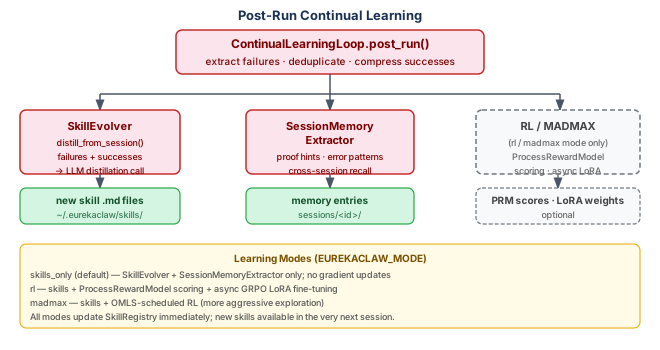
运行后学习#